
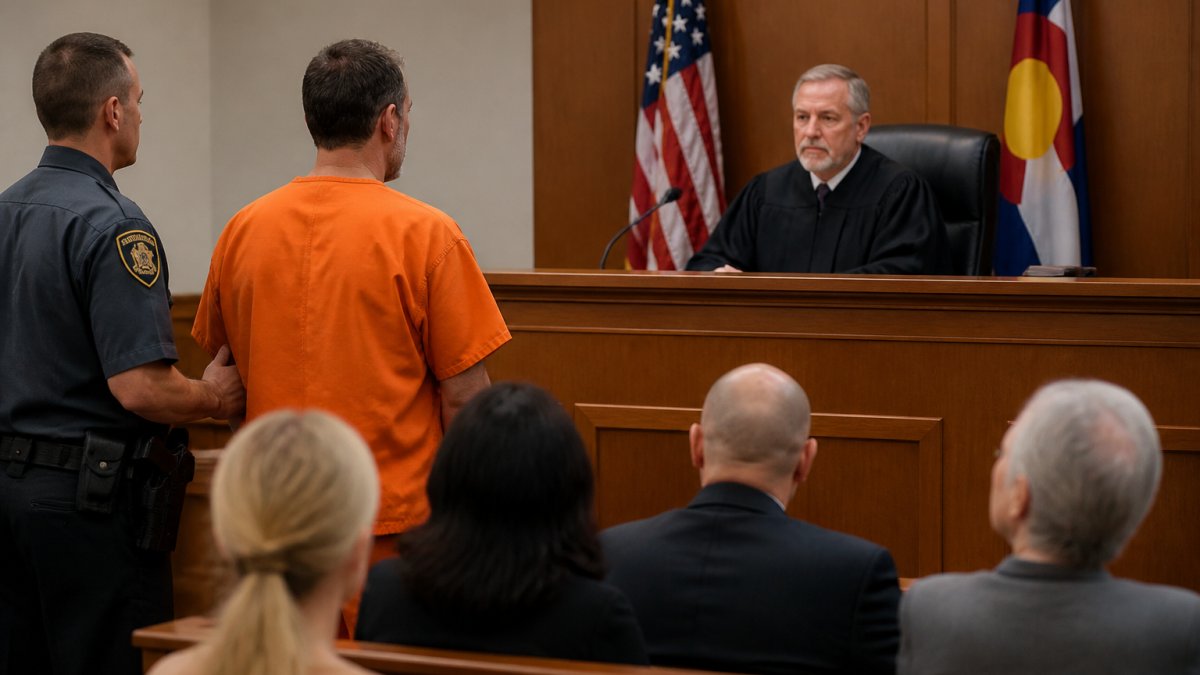
A Weld County arraignment is a formal court hearing where a judge reads the charges against you and asks how you plead. You check in, confirm your identity, hear your charges and rights explained, then enter a plea while the judge may set bond or release conditions.
Last Updated: October 27, 2026
Quick Summary
- The initial appearance happens quickly after arrest, while the arraignment comes later once the complaint is filed.
- Arrive 15 to 30 minutes early and leave pocket knives and tools at home, since officers will not hold items for you.
- Your case may be called anywhere from a few minutes to over an hour after the scheduled start time.
- If you do not have an attorney, tell the judge when you are addressed rather than waiting to be asked.
- Never assume a hearing was canceled just because you did not receive a reminder; confirm every court date directly.
Table of Contents
- What to Expect at a Criminal Arraignment in Weld County
- Step-by-Step: What Happens During a Weld County Arraignment
- How to Prepare for an Arraignment in Weld County
- Arraignment Plea Options and What They Mean
- Misdemeanor vs. Felony Arraignments in Weld County
- What Happens After Arraignment
- What to Do If You Miss an Arraignment or Cannot Attend
- Next Step: Speak With a Weld County Criminal Defense Attorney
- Frequently Asked Questions
What to Expect at a Criminal Arraignment in Weld County
A Weld County arraignment is a formal court hearing where a judge reads the charges against you and asks how you plead. It is one of the first real court dates in a criminal case, and what you say there shapes everything that follows. (Source: Sixth Amendment)
The short version: you show up, are called to the bench, the judge explains your charges and rights, and you enter a plea. That sounds simple. It is not.
Here is what happens.
Initial Appearance and Advisement
The arraignment often follows an earlier hearing called the initial appearance, where a judge confirms your identity and tells you what you are charged with. This is called the advisement.
At the advisement, the judge will cover:
- The specific charges filed against you
- The possible penalty for each charge
- Your right to counsel, meaning your right to a lawyer (Sixth Amendment Activities)
- Your right to remain silent
- The bond amount or release conditions
The two are separate: the initial appearance happens quickly after arrest, while the arraignment comes later, once the complaint is filed.
If you are held in custody, these hearings can happen fast; if released on a summons, you may get a court date by mail. Either way, do not treat the first hearing as routine, it sets the tone for your entire criminal case.
Step-by-Step: What Happens During a Weld County Arraignment
Here is how the hearing unfolds.
1. Arrival and security (15-30 minutes before your time). You will pass through a metal detector, send your bag through an X-ray, and empty your pockets. Leave anything that could be treated as a weapon, including pocket knives and tools, at home or in your car; officers will not hold items for you. Once through security, ask a clerk where your courtroom is, since courtrooms are assigned by case, not charge type.
2. Check-in and waiting. In most Weld County courtrooms, you check in with a clerk or bailiff outside the door or sign a sheet near the entrance. Have your case number or summons handy. Arraignment dockets are often stacked, and your case may be called anywhere from a few minutes to over an hour after the scheduled start time.
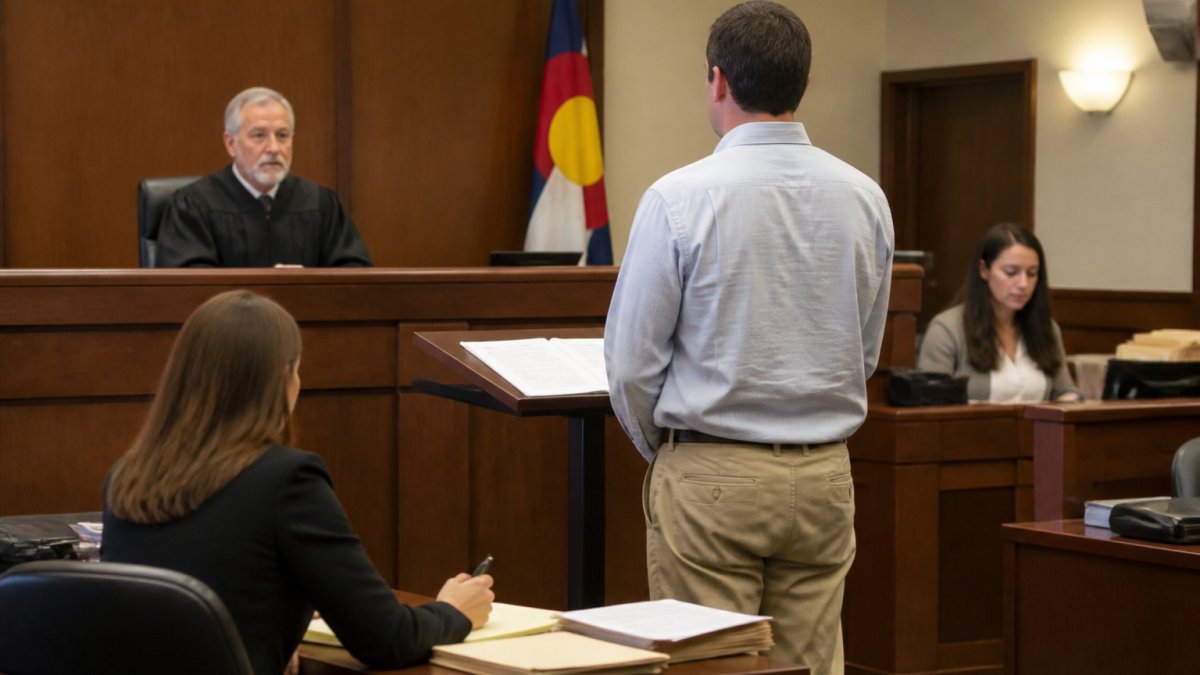
3. Your case is called. A bailiff or clerk calls your name, often the full legal name on the charging documents. Stand and step forward to the podium or defense table. If you have an attorney, they will typically be beside you. If you do not have one, tell the judge when you are addressed; do not wait to be asked.
4. The judge confirms your identity. The judge or clerk will ask you to state your name and date of birth and confirm that you received the charging documents. Answer directly. This is not the time to explain your side of the story.
5. The charges are read and the judge explains them. The judge or clerk explains the charges and asks whether you understand them. If anything is unclear, say so out loud.
6. Your rights are explained. The judge covers your right to counsel and other rights. If you are unsure about proceeding, ask the judge about your options.
7. You enter a plea. This is the core of the hearing. The judge asks how you plead. The available plea options and next steps depend on the case.
8. Next steps and release conditions are set. The judge may address future court dates, bond, or release conditions. Write down any information provided, do not rely on memory.
9. You are excused. The hearing ends when the judge moves to the next case.
Do not mistake simplicity for lack of importance. A plea can have serious consequences.
Charges and Possible Penalties
Before you plead, you need to understand what you are facing. The judge will explain the charges and the penalties attached to each one.
Offenses may carry different penalties. If you do not understand the charges or potential penalties, ask for clarification.
An attorney can review the charges and the facts of a case.
How to Prepare for an Arraignment in Weld County
A few concrete steps can help you prepare for the hearing.
Confirm the date, time, and courtroom, in writing. Do not rely on a memory of a phone call or a text from a friend. Confirm the details with the court.
Arrive early. Allow time to get to the courtroom and check in.
Bring any paperwork you have received.
Check the court's official guidance about items permitted in the courthouse. (Source: Federal Rules of Criminal Procedure)
Know how to check in. Ask court staff if you are unsure where to go.
Treat the courtroom with respect. Follow any instructions provided by the court.
Write down your questions in advance. A short list can help you remember what you want to ask. For more in-depth criminal defense articles from the firm, browse our blogs.
Be cautious about discussing your case. Consider speaking with an attorney about questions concerning your case.
Confirm whether the hearing is in person or remote with the court. Follow the court's instructions for attending.
For a fuller walkthrough of the local process, read our guide on how to navigate Weld County Court. It covers the building, the check-in process, and what to expect once you are inside.
Arraignment Plea Options and What They Mean
An arraignment includes a question about how you plead. The available plea options and their consequences depend on the case.
If you are unsure about a plea, consult an attorney before entering one.
If you are weighing whether to fight or negotiate, our article on whether you need an aggressive lawyer explains how defense strategy shifts at this stage.
Misdemeanor vs. Felony Arraignments in Weld County
The process and next steps may depend on the charges.
| Feature | Misdemeanor Arraignment | Felony Arraignment |
|---|---|---|
| Typical charges | Lesser offenses | Serious offenses |
| Where it happens | County or district court | District court |
| Key next step | Pretrial or trial setting | Preliminary hearing |
| Plea timing | Often entered early | Often delayed pending review |
| Stakes | Lower penalty range | Higher penalty range |
The next steps in a case depend on its circumstances.
If you are facing serious allegations, review our violent crimes defense page to understand how we approach high-stakes cases.
What Happens After Arraignment
The next phase of a case depends on the circumstances and any plea entered.
Ask an attorney about any release conditions that apply to your case.
Our guide on the steps to take after a felony arrest walks through this phase in detail, from evidence review to building your defense.
What to Do If You Miss an Arraignment or Cannot Attend
Missing a court date can have serious consequences (What happens if I don't pay the ticket or appear in court?). Contact the court or an attorney if you cannot attend.
If you know you cannot attend, contact the court and your attorney as soon as possible.
If you already missed a hearing, contact an attorney promptly.
Watch out: never assume a hearing was canceled just because you did not receive a reminder. Confirm every court date directly with the court or your lawyer.
Next Step: Speak With a Weld County Criminal Defense Attorney
An arraignment is a court hearing. Consider consulting an attorney about your case.
The Greeley Tribune described Bob Ray as "a bulldog in the courtroom." The Law Offices of Robert E. Ray offers bilingual services (Se Habla Español).
Contact the Law Offices of Robert E. Ray.
Frequently Asked Questions
What happens at a Weld County arraignment?
A Weld County arraignment is a court hearing in a criminal case. The specific procedure and next steps depend on the case. Contact the court or an attorney for information about your hearing.
How should I prepare for an arraignment in Weld County?
To prepare for an arraignment, confirm the hearing details with the court and consider consulting an attorney about what to bring and what to expect.
What are my arraignment plea options?
Plea options and their consequences depend on the case. Consult an attorney before entering a plea.
What happens after arraignment in Weld County?
The next steps after an arraignment depend on the case. Contact the court or an attorney for information about your case and any upcoming court dates.
Facing a charge and unsure what your arraignment means for you? The right defense starts with clear answers and a lawyer who fights for you. Contact Law Offices of Robert E. Ray today to schedule a consultation and get a straight answer about your case.


